
Tiger tattoo meaning: the Suea Sak Yant explained
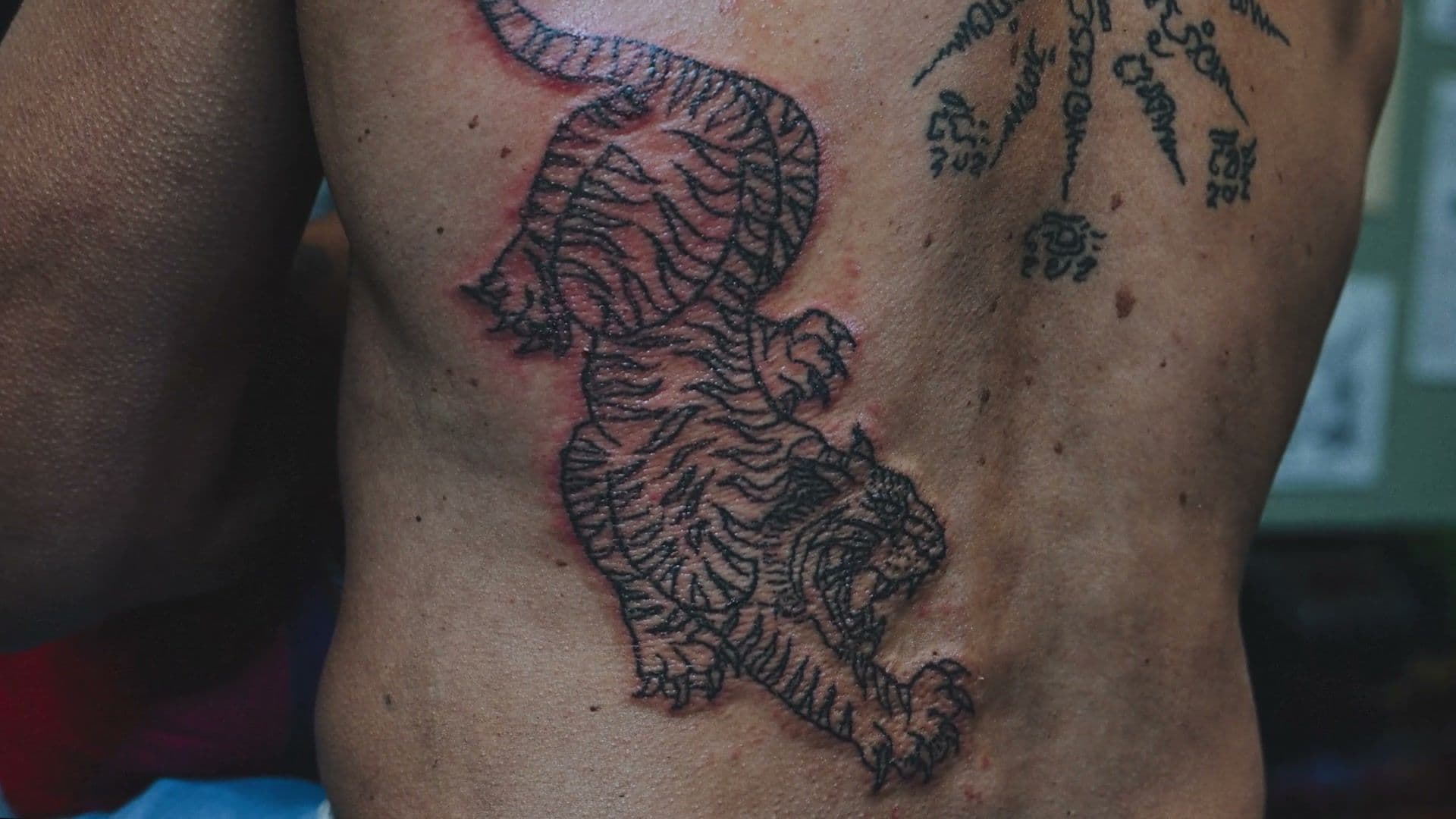
What does a tiger tattoo mean? In the Sak Yant tradition it is called Suea and stands for courage, authority and protection.
The tiger is one of the most chosen tattoo motifs worldwide, and almost always for the same reason: strength. Within the Sak Yant tradition it is called Suea, and there that idea gets a more precise meaning than just muscle.
What does a tiger tattoo mean?
Broadly, the tiger stands for courage, authority and the ability to stand up for yourself. It is associated with instinct: acting on what you feel rather than weighing things up endlessly. That is the meaning you find in almost every tattoo culture.
Within the Thai tradition something is added to that. The Suea is seen not only as a symbol of strength, but also as protection: a presence that keeps opponents at a distance. Traditionally this Yant was worn by people who needed authority or who found themselves in dangerous situations. The emphasis therefore lies less on aggression and more on awe.
As with every Yant, the explanation can differ per master. One ajarn stresses leadership, another defence. That difference is not sloppiness but belongs to a tradition that has been passed on orally.
The tiger variants and what sets them apart
The posture of the tiger determines the emphasis of the design. That is not an aesthetic choice but a substantive one.
Where is a Suea placed?
Tiger Yants are often placed on the back, shoulder or upper arm. That has a practical and a substantive reason. Practical because the design needs room to stay legible, substantive because the tradition considers higher on the body to be more sacred.
The direction the tiger faces matters. A forward facing tiger is read as moving ahead, a backward facing one as protection of what lies behind you. That is exactly the kind of detail that disappears when a design is copied out of a catalogue.
Frequently asked questions about the tiger Sak Yant (FAQ)
Is the Suea only for men?
No. The association with masculinity comes mainly from Western tattoo culture, not from the tradition itself. The Suea is about courage and authority, and that is not tied to a gender.
What is the difference between the Suea Koo and a single tiger?
The Suea Koo consists of two mirrored tigers and puts the emphasis on balance and protection from two sides. A single tiger focuses on one movement: advancing, defending or being present.
Do I have to follow rules if I wear a tiger Yant?
Within the tradition, how a Sak Yant works is connected to how you live. Five precepts are usually named, based on the Buddhist Sila. How strictly they are interpreted differs per ajarn and is discussed during the intake.
Can a tiger be combined with another Yant?
Yes, that happens regularly. The combination does determine the placement and the order, so it is something to talk through beforehand rather than decide along the way.
Recent blogs
Dive deeper into Sak Yant, traditions and tattoo care.
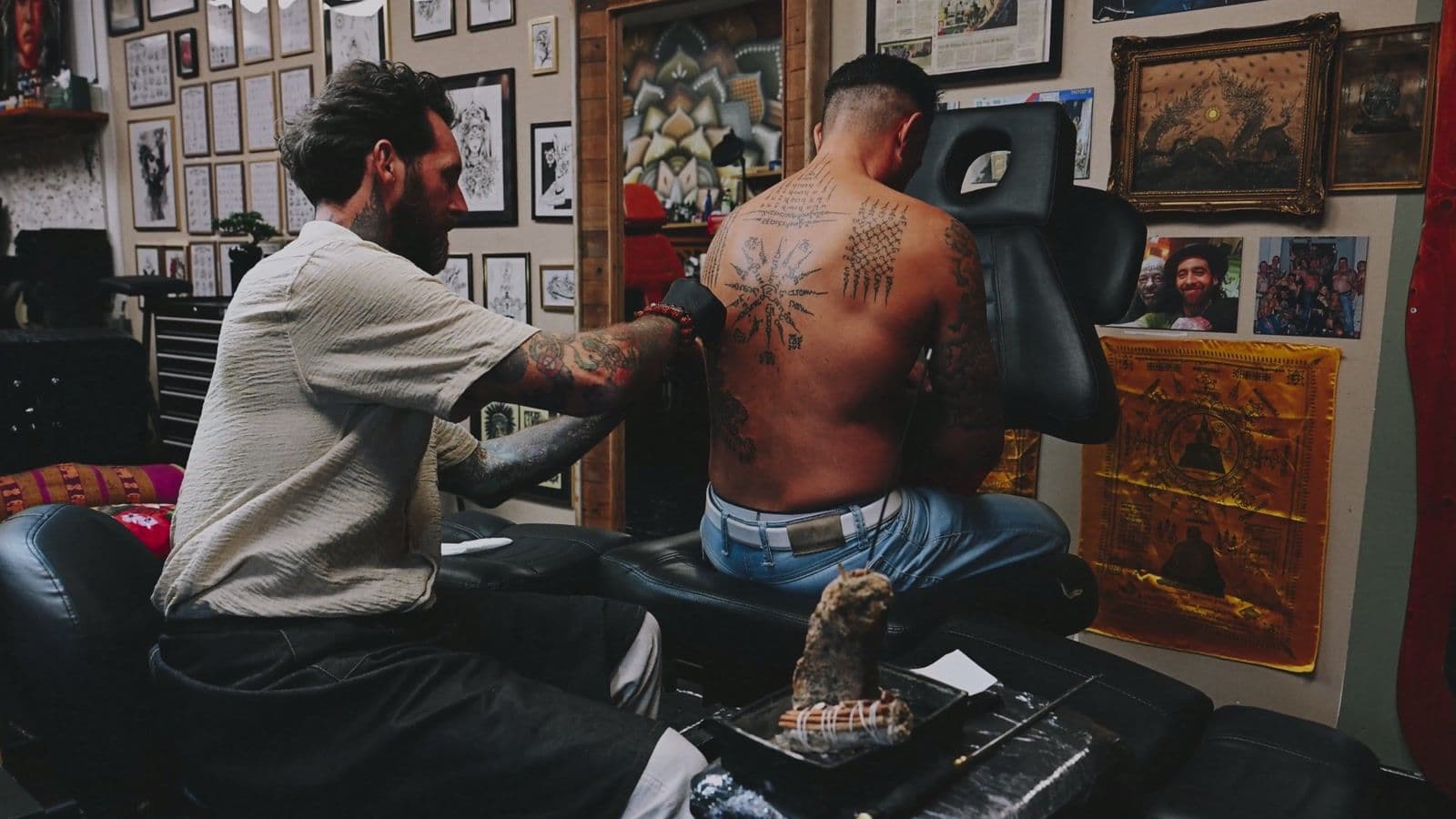
Sak Yant video: how a Sak Yant is tattooed in the Netherlands
A Sak Yant from start to finish, filmed at the studio. Watch the video and read what you see: the design, the rod, the calm in the studio and the closing moment.
4 min read
The 10 most popular Sak Yant designs and what they mean
From the Hah Taew to Ganesha: the ten Sak Yant designs chosen most often, with their meaning and where they work best on the body.
6 min read
Getting a Sak Yant from Amsterdam, Rotterdam, Utrecht or Eindhoven
You will not find an authentic Sak Yant in every city. How long it takes to reach the studio in Breda from Amsterdam, Rotterdam, The Hague, Utrecht and Eindhoven, and what to look for.
5 min read